Power after 40

How high can you jump right now?

Shawn Baker is 59 and still jumping, measuring, and chasing improvement. Your vertical gives you a simple starting point: what can your lower body do today, and can you make it better?

For lifters. Former athletes. CrossFitters. Anyone who still wants to move well.
Age 59
Shawn BakerStill chasing the next jump.
Watch on Instagram →
Measure. Train. Retest.

One jump becomes a trend.

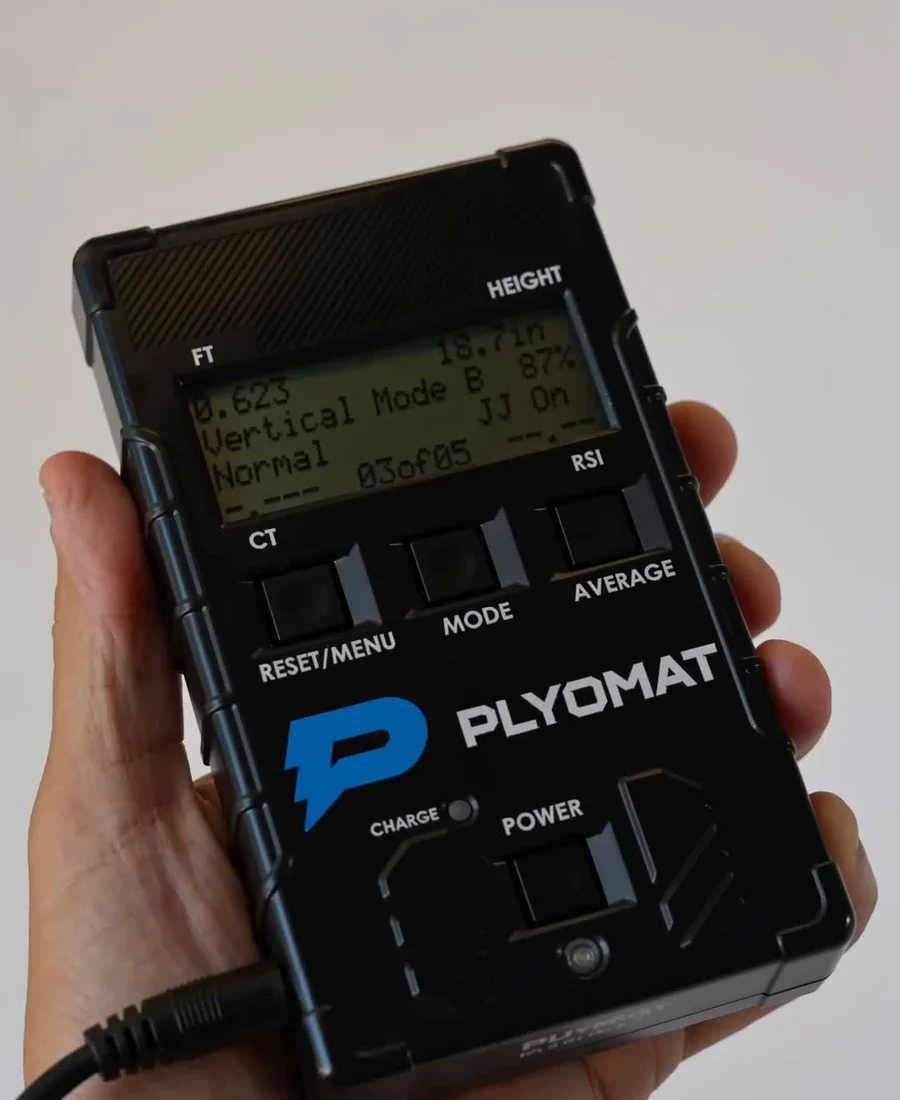
Plyomat Controller displaying a measured jump result
01 · MeasureGet the number

Jump. Land. See your result immediately.
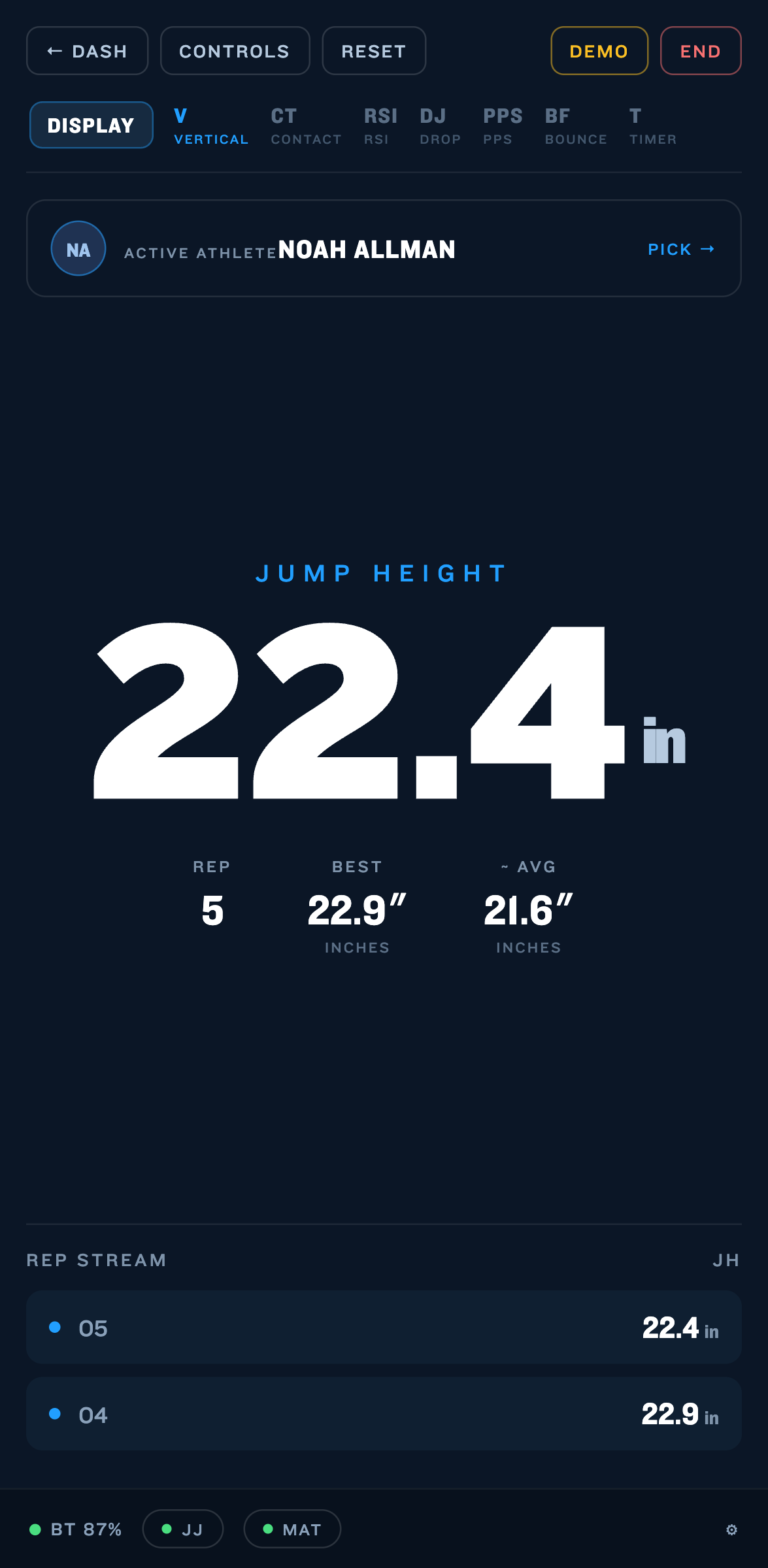
Plyomat display showing a 22.4 inch jump
02 · EstablishSet your baseline

Your first honest result gives you something to beat.
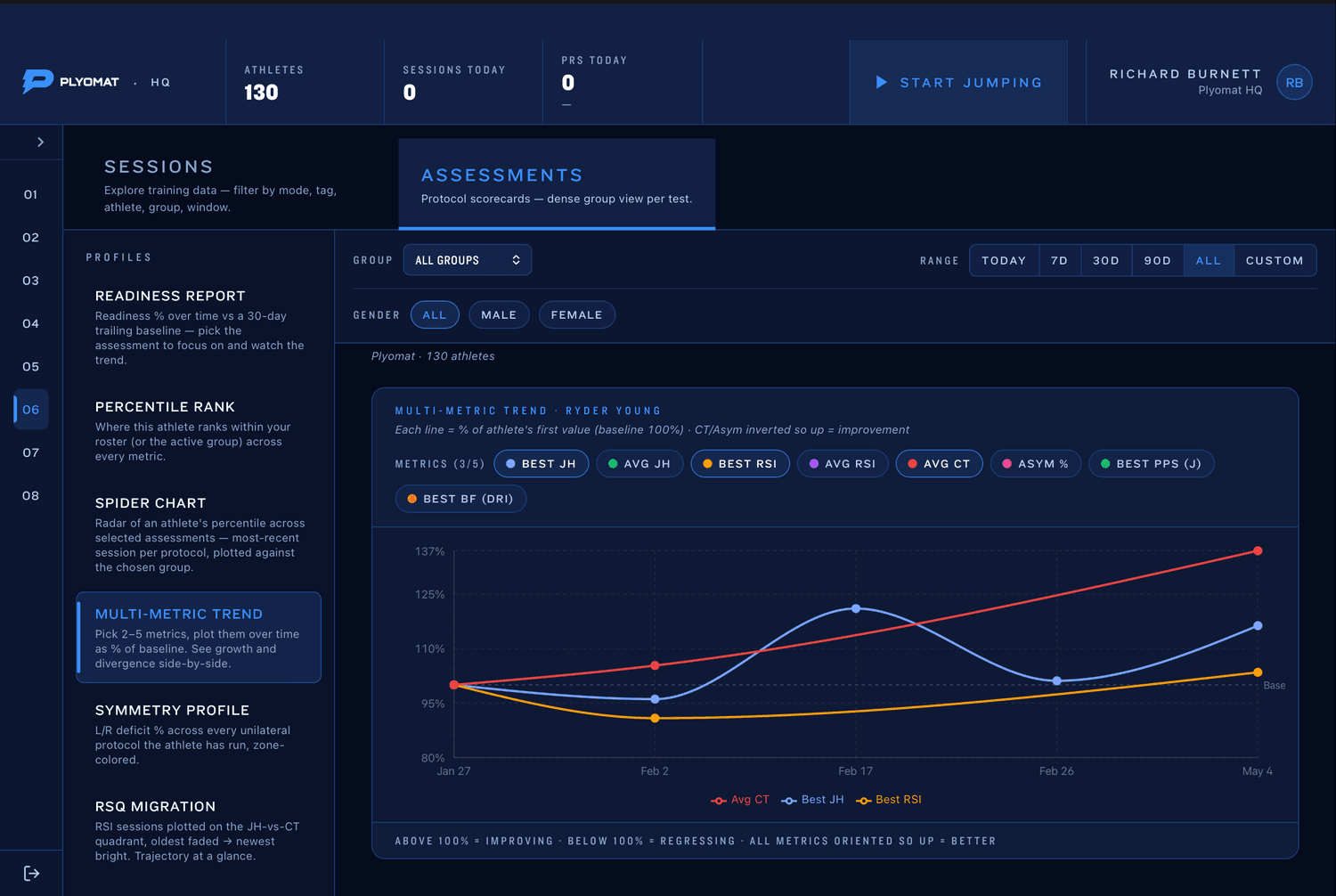
Plyomat trend report comparing jump results over time
03 · RetestWatch the trend

Come back after training and see what changed.

Why power matters

Aging changes power. Measurement gives you a starting point.

Strength is how much force you can produce. Power is how quickly you can use it. Research shows that power changes with age and can improve with training. That makes it worth tracking.

10 yr

Power tracked over time

A longitudinal study measured changes across young, middle-aged, and older adults.

View study →
55 to 75

Jump testing by age

Controlled countermovement-jump testing was repeatable in healthy adults.

View study →
534

Older adults studied

Jump performance was associated with strength and mobility measures.

View study →
Free baseline calculator

Start with today's jump.

Enter today's result. Add a previous jump only if you already have one.

Keep it consistent: same device, warm-up, footwear, and jump technique.

Your starting point
12.0 in
Save this number and retest in 4 to 6 weeks
Baseline setcomparison
0.499 simplied flight time
2.44 m/simplied takeoff velocity
30.5 cmtoday's jump
Repeatable testing

Use one simple protocol.

  1. Warm up. Take several easy practice jumps.
  2. Use one technique. Keep your arm action consistent.
  3. Jump three times. Rest, then keep the best result.
  4. Retest in 4 to 6 weeks. Use the same setup.
Jumping is a maximal, high-impact task. Do not use it as a self-test if you cannot jump and land confidently, or if pain, dizziness, a recent operation, a fall history, or a medical condition makes maximal effort inappropriate. A qualified clinician or coach can select a suitable alternative.
Research behind the guide

Read the evidence.

The evidence behind the page, available for anyone who wants to go deeper.

Power across ten years

Longitudinal changes in muscle power, force, and velocity.

PubMed →

Jump-test reliability

Countermovement jumps in healthy adults ages 55 to 75.

PubMed →

Jumping and physical function

Associations in 534 community-dwelling older adults.

Full text →

Power can improve

A 24-week randomized training trial in adults ages 65 to 84.

PubMed →
Keep learning

Useful next reads and tools.

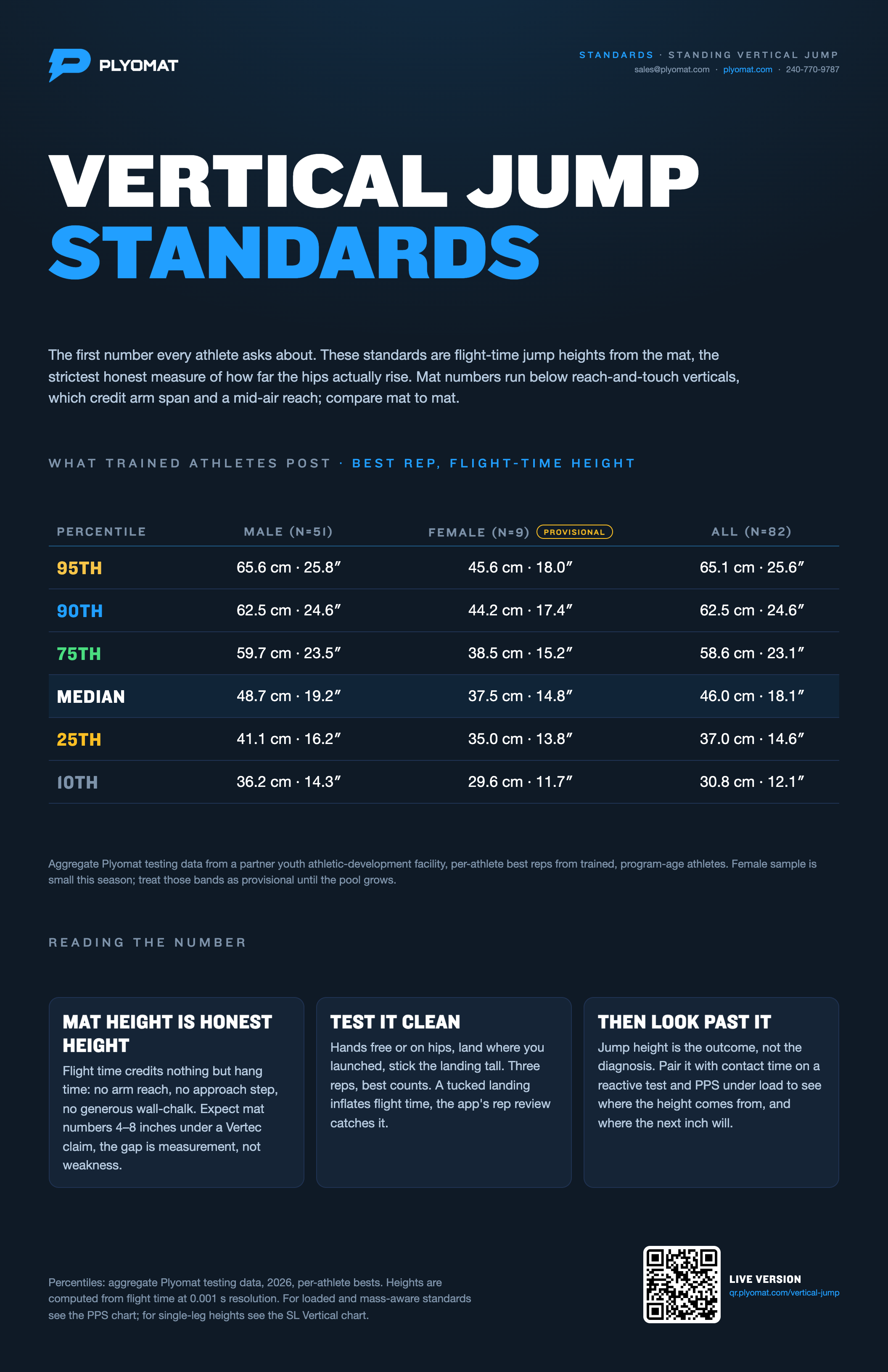
Plyomat vertical jump standards chartReal Plyomat data

Vertical jump norms

See where your result sits among tested athletes.

Explore the data →
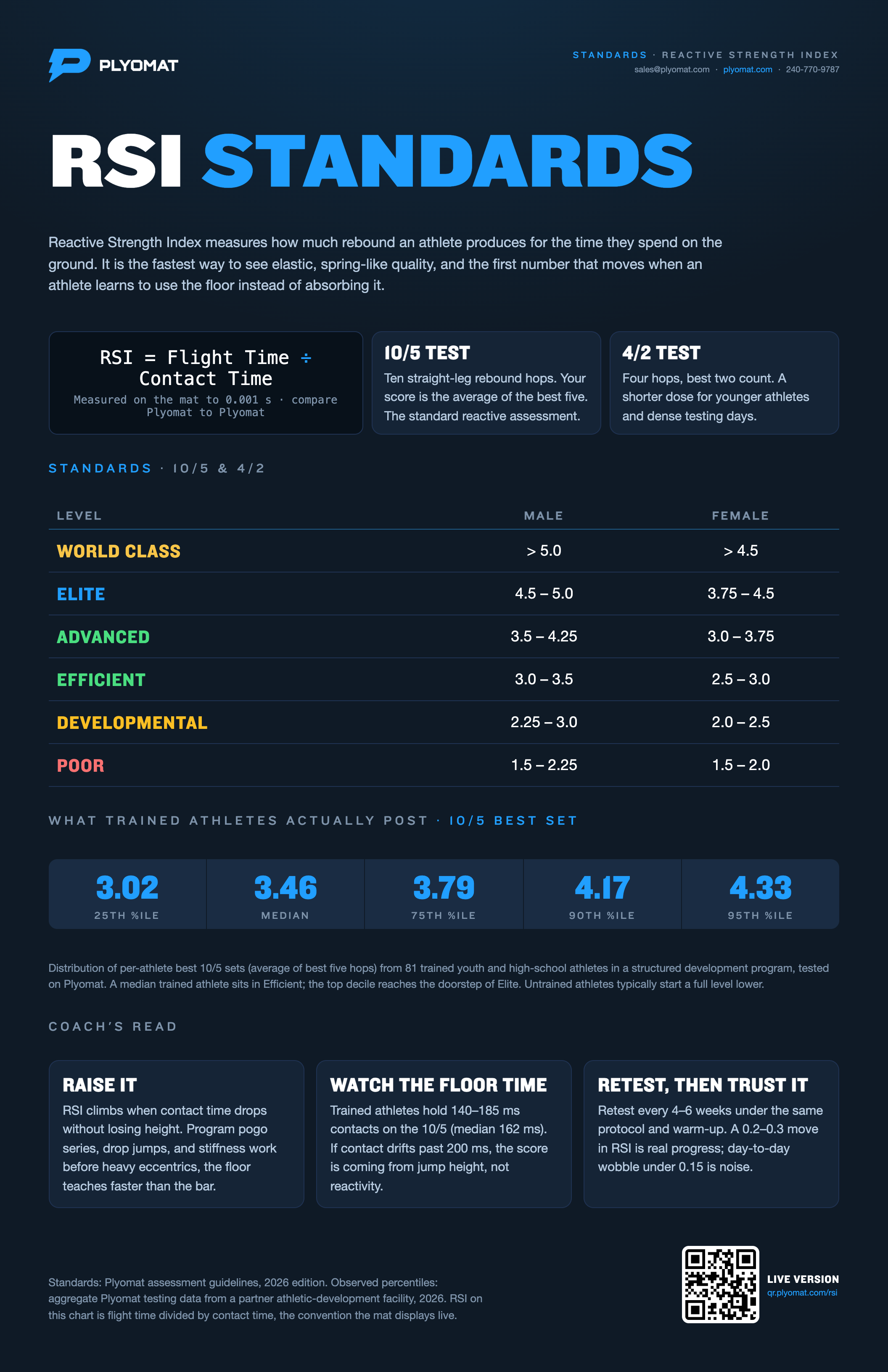
Plyomat reactive strength standards chartFree calculator

RSI calculator

Combine jump height with ground-contact time.

Open calculator →
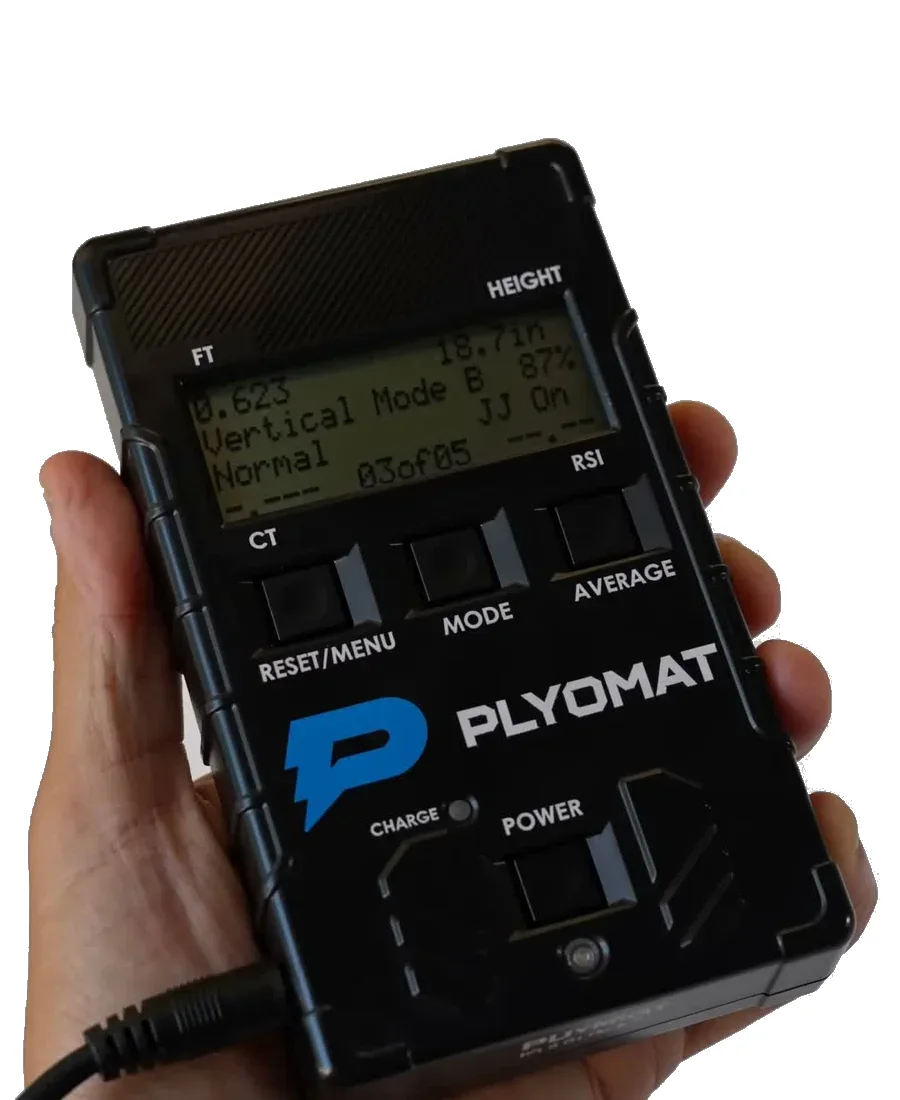
Plyomat Controller 3.0 held in one handMeasurement

How Plyomat was validated

See the independent force-plate comparison.

See validation →
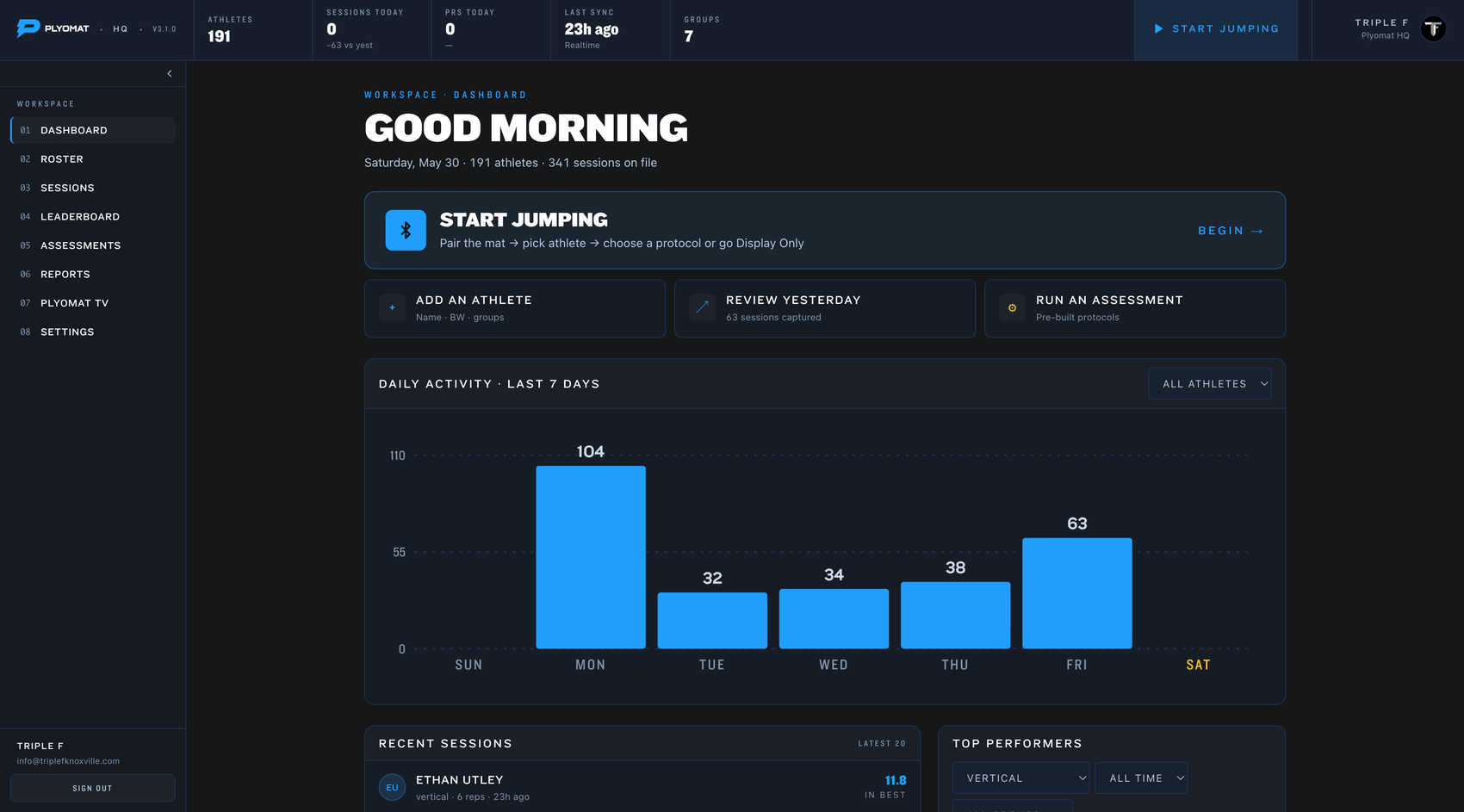
Plyomat app dashboardFree Plyomat app

Turn tests into trends

Save sessions and follow long-term progress.

Explore the app →
Questions

Vertical jump after 40 FAQ

Is vertical jump useful after age 40?
For healthy adults who can jump and land safely, a countermovement jump is a practical way to track explosive lower-body performance. Research supports its repeatability and its association with strength and mobility in older adults. It is a performance test, not a medical diagnosis.
How often should I test?
For long-term progress, every four to six weeks is a practical cadence. Use the same warm-up, footwear, technique, surface, and measurement method. Record the best of three quality attempts.
Should I compare myself with younger athletes?
You can, but athlete norms often represent trained populations. For most adults over 40, a repeatable personal baseline and the direction of change are more actionable. If you want context, see our athlete norms and read the population notes carefully.
Does Plyomat measure muscle power directly?
Plyomat measures flight time and calculates jump height. A switch mat does not directly measure force or true mechanical power like a force plate. It gives you a clear, practical outcome to track with a consistent protocol. See our jump mat vs. force plate guide.
Choose your next step

Make power measurable.

Plyomat gives you flight-time-based jump height on the controller and in the free app, with no subscription. Need help choosing a setup for yourself, your clients, or your gym? Talk with a Plyomat rep.